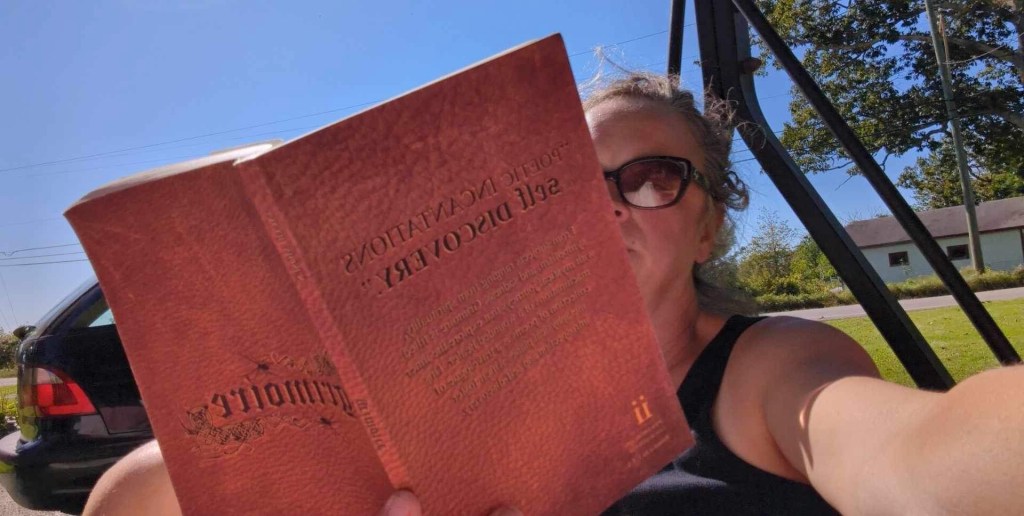
Jacob R. Moses’ book of poetry Grimoire invites the audience to immerse itself in a world of introspection. The poems wander through minefields of disillusionment and pain to explore what it means to be a poet, a believer, and a survivor. Each enchanted umbrella under which the poems fall offers shelter from a world broken by a lack of compassion and responsibility for how one’s actions impact another’s experience.
“Majesties” in Incantations defines the poet in ten couplets that cohere seamlessly. Firmly rooted in the identity of poet, the other aspects of the poet’s life empath, sage, and Jew ¬deepen the audience’s understanding of his journey.
Also, in Incantations, the sonnet “Forgiveness” features a first-person speaker who explores the “flight or fight” instinct. This universal idea infused with elements of magic reinforces what it means to be part of a solution, not just for one’s self but for the world.
The continuity of the idea of forgiveness calls out organized religion in Demonology. “Gauntlet” explores aspects of guilt; in the final stanza, “Damned if clergy considers/ Control to be support” (29-30) places onus for the burdens of guilt and how it undermines humanity where the onus belongs.
These three poems begin Grimoire but, truly, are only the beginning. From “Genesis of Jacob” to “Landmark of Light” and “Celestial Mirror,” this anthology emphasizes the struggle to be whole while stirring those conflicts with a wand of wonder to make it magical.
 Jacob R. Moses